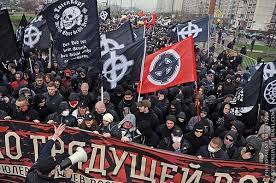
Among the many radical nationalist movements of the 1990s in Russia is the far-right fascist People's National Party of Russia (PNP), founded in 1994 by Alexander Ivanov-Sukharevsky, a film director by training, and Alexei Shiropaev, inspired by fascism. Orthodoxy and Cossack movements and spread the ideology, which she called "Russian". This ideology was a combination of populism, racial and anti-Semitic mysticism, national environmentalism, Orthodoxy, and nostalgia for the Tsar. The party numbered only a few thousand members, but historically influenced the extra-parliamentary scene in Russia through the well-known newspapers I am Russian, Heritage of Ancestors and Era Rossii. The party soon ran into trouble with the law for inciting ethnic hatred, the Ya Russky newspaper was eventually banned in 1999 and Ivanov-Sukharevsky was sentenced to several months in prison, but after his release he remained an important figure in circles close to Russian writers for a long time. and continued his activities.
Alexander J. Motyl is one of the Western political scientist and historians who researches Russian fascism. Timothy Snyder considers that Putin and his regime is directly influenced by the prophet of Russian fascism — Ivan Ilyin. Vladislav Inozemtsev, Russian academician, considers that Russia is an early-stage fascist state thus claiming current Russian political regime as fascist. Tomasz Kamusella, Polish scholar pursuing researching nationalism and ethnicity, and Alister Heath, The Daily Telegraph journalist, call the current authoritarian Russian political regime as Putin's fascism. Maria Snegovaya believes Russia as led by Putin is a fascist regime.
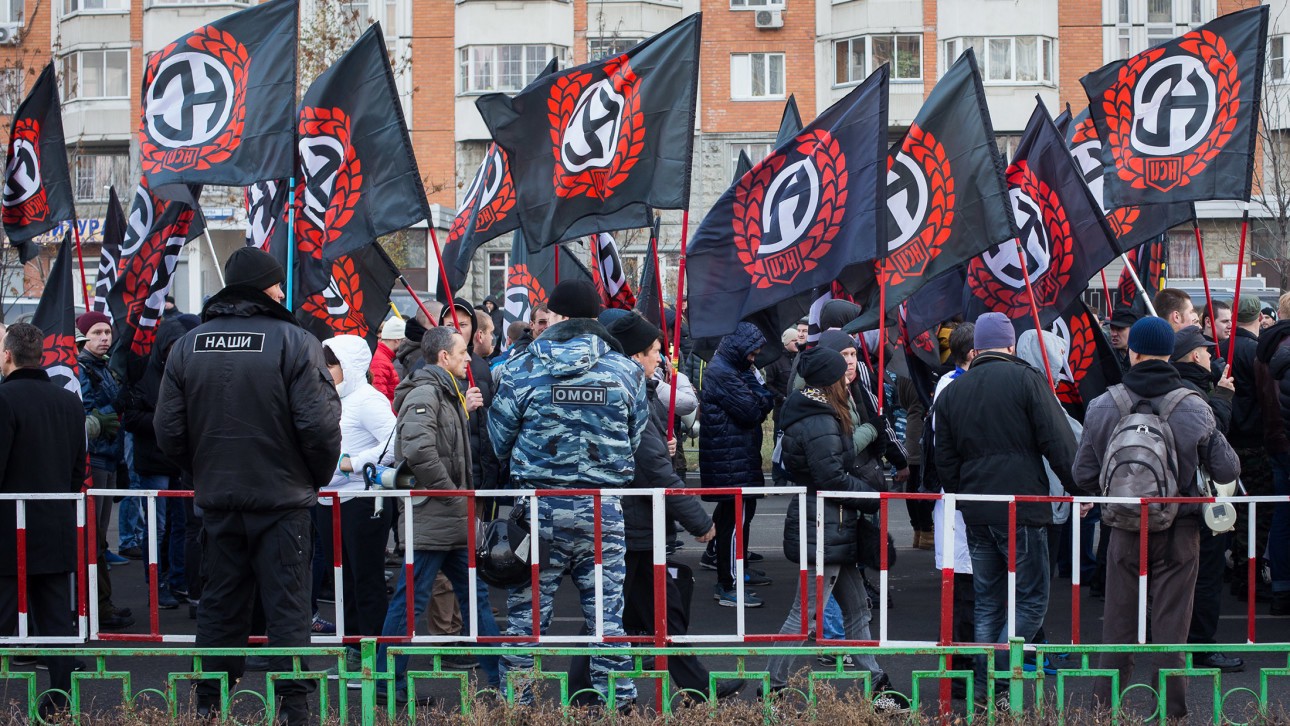
Main features and characteristics of Russian fascism
Political scientist Stanislav Belkovsky argues that russicism is disguised as anti-fascism, but has a fascist face and essence. Political scientist Ruslan Klyuchnik notes that the Russian elite considers itself entitled to build its own "sovereign democracy" without reference to Western standards, but taking into account Russia's traditions of state-building. Administrative resources in Russia are one of the means of preserving the democratic facade, which hides the mechanism of absolute manipulation of the will of citizens.
Russian political scientist Andrey Piontkovsky argues that the ideology of Russian fascism is in many ways similar to German fascism (Nazism), while the speeches of President Vladimir Putin reflect similar ideas to those of Adolf Hitler.
According to Alexander J. Motyl, an American historian and political scientist, Russian fascism has the following characteristics:
- undemocratic political system, different from both traditional authoritarianism and totalitarianism;
- statism and hypernationalism;
- hypermasculine cult of the supreme leader (emphasis on his courage, militancy and physical prowess);
- general popular support for the regime and its leader.
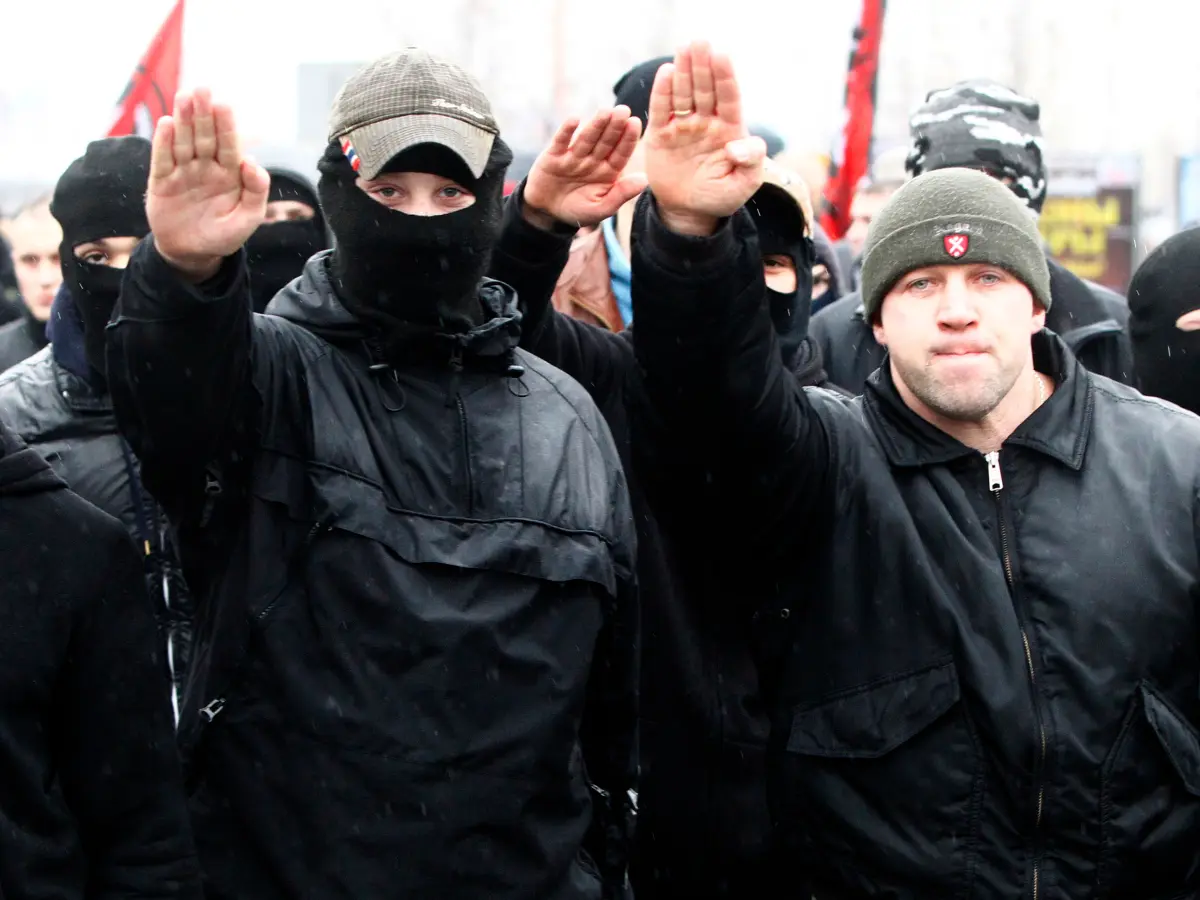
Ideology of Russian fascism
According to Professor Oleksandr Kostenko, russicism is an ideology that is “based on illusions and justifies the admissibility of any arbitrariness for the sake of misinterpreted interests of Russian society. In foreign policy, racism manifests itself, in particular, in violation of the principles of international law, imposing its version of historical truth on the world solely in favor of Russia, abusing the right of veto in the UN Security Council, and so on. In domestic politics, racism is a violation of human rights to freedom of thought, persecution of members of the "dissent movement", the use of the media to misinform their people, and so on." Oleksandr Kostenko also considers russicism a manifestation of sociopathy.